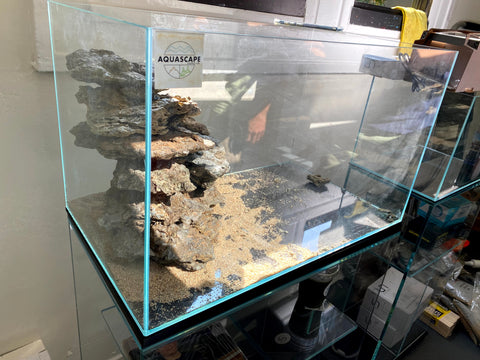
Style isn't decoration. It's a set of rules about hardscape, planting density, and negative space that tells you what to do next when you're not sure. Pick one before you buy a single stone.
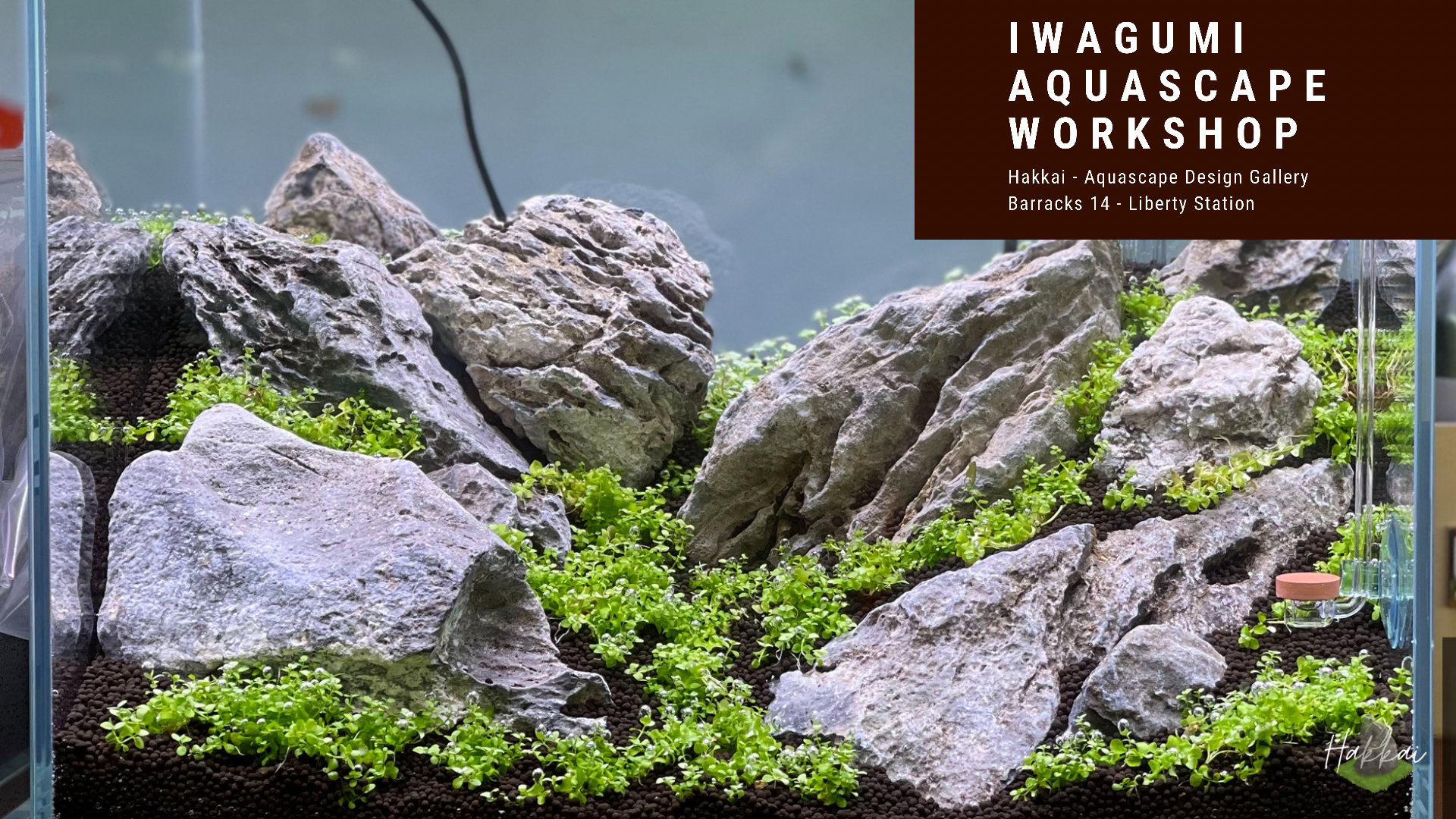
Japanese "rock formation." Three to five stones (always odd), one dominant, a single carpeting plant, and almost nothing else. The hardest style to do well because there's nowhere to hide a mistake.
Read the breakdown ↓
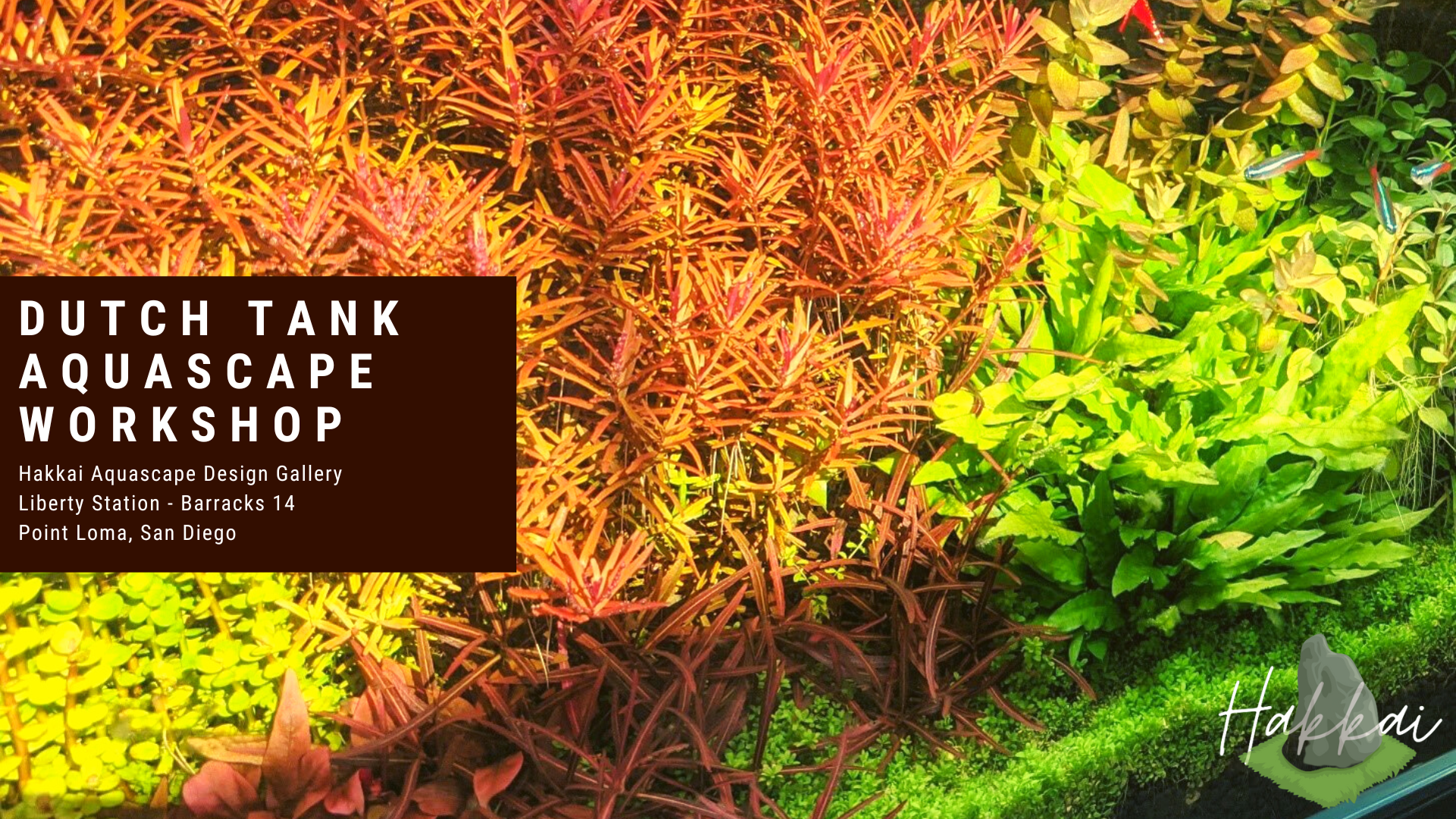
No hardscape at all — the plants are the entire composition. Built in "streets" of contrasting color, leaf shape, and height. The oldest planted-tank style, older than the word "aquascaping" itself.
Read the breakdown ↓
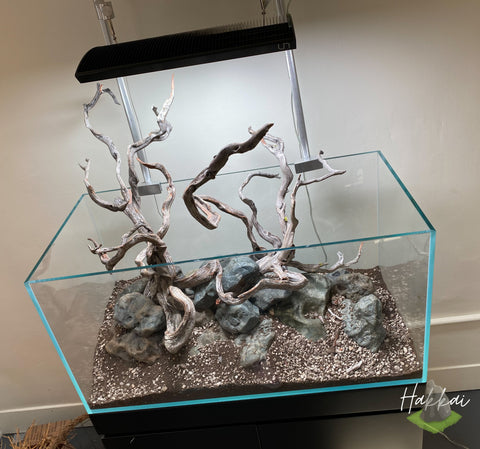
The Amano-inspired style most people picture when they hear "aquascape." Driftwood and stone form a skeleton; plants grow in to soften and half-obscure it, aiming for a scene that looks found, not built.
Read the breakdown ↓
Recreates one specific real-world habitat — down to the region, water chemistry, and species list. Less about beauty by design, more about accuracy; the beauty is a side effect of getting it right.
Read the breakdown ↓
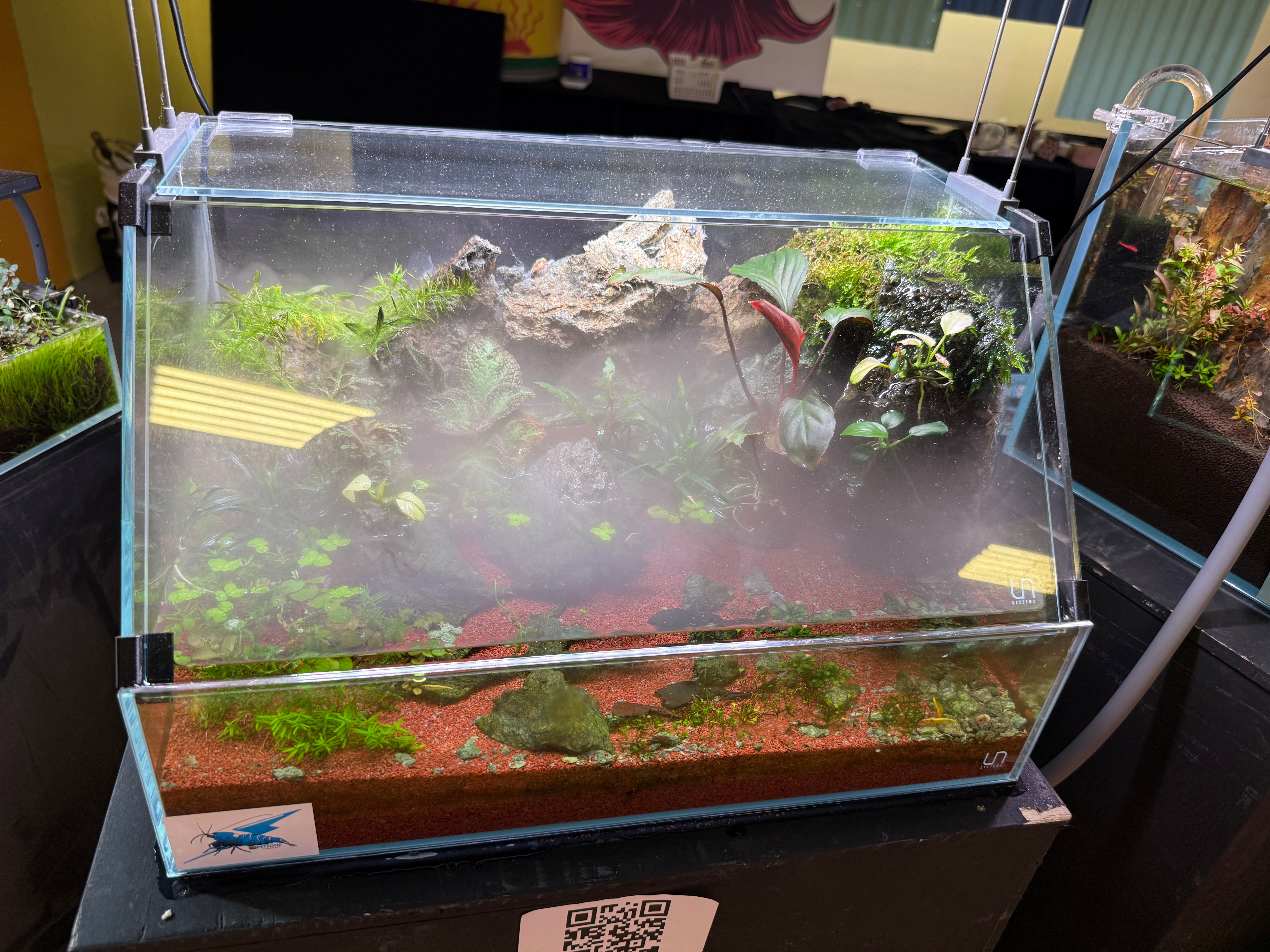
Half aquarium, half terrarium. Land and water share the same tank, usually built around a waterfall or slope. More building project than aquascape — hardscape has to work wet and dry.
Read the breakdown ↓Three stones minimum, always an odd count. One stone — the Oyaishi, or "parent stone" — is largest and set off-center, usually on the golden-ratio third. The others are smaller and echo its angle rather than compete with it.
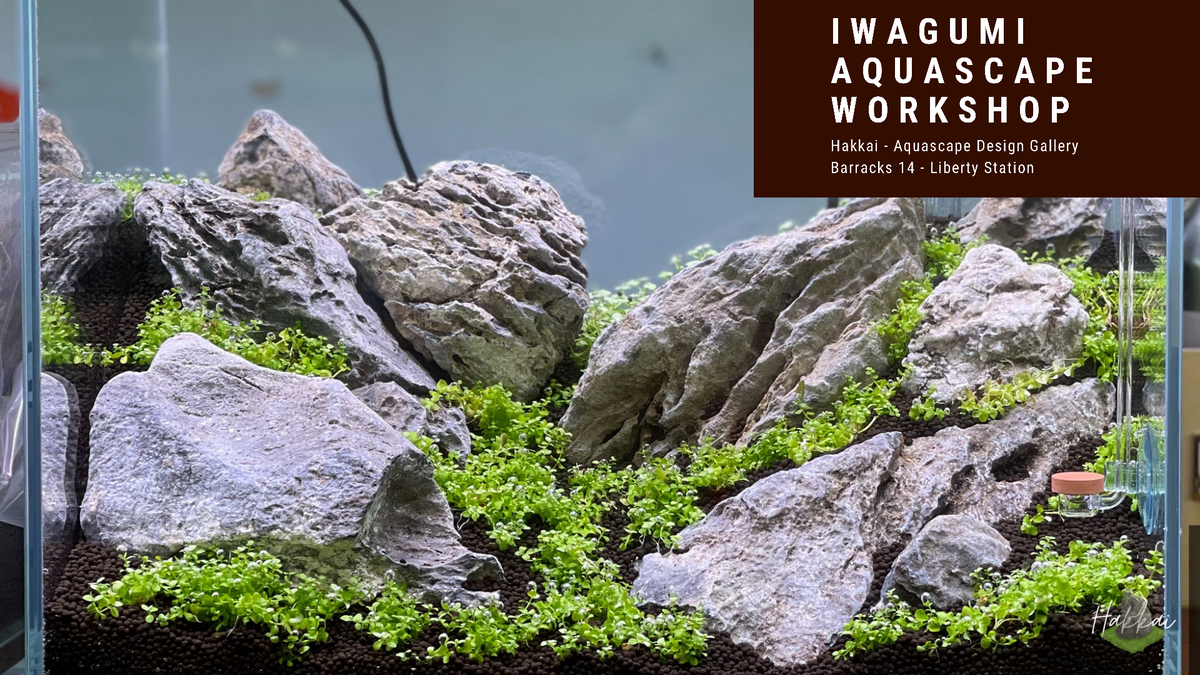
Planting is almost always a single carpet species (dwarf hairgrass, Monte Carlo, or glosso) kept low and dense, so the stones stay the entire visual event. Fish are chosen for schooling motion, not color — a shoal of small tetras or rasboras reads as movement across the empty space, not a focal point.

Built in "streets" — straight or gently curved rows of a single plant species, each row contrasting the next in leaf texture, color, and height. No hardscape, no negative space; the tank is planted edge to edge.
The skill is entirely in plant selection and trimming discipline — keeping each street a consistent height and shape so the rows read as bands from the front glass, not a jumble.

Driftwood or stone forms the structural skeleton first — branches, ridgelines, a sense of a place that existed before the plants arrived. Planting then grows in around and through that structure rather than replacing it.
Depth is the goal: foreground, midground, and background planted at different heights and leaf sizes to fake distance in a glass box that's only two feet deep.

Everything in the tank — substrate, hardscape, water parameters, and every plant and fish species — matches one real, specific location. Not "South American," but a particular river bend.
The visual result is often sparser and more muted than a jungle-style tank, because nature usually is. That's the point: accuracy is the metric, not drama.

Land and water in the same enclosure, usually connected by a slope, waterfall, or emersed planting that bridges the waterline. Requires hardscape and sealant choices that survive both wet and dry conditions.
Best treated as a build project first, aquascape second — plumbing a waterfall or misting system takes precedence over layout theory in the early stages.

The technique guides walk through hardscape placement, planting order, and trim schedules step by step.